Screening genetic preimplantațional (PGT)
Reprezintă o tehnică de testare genetică a embrionilor pre-implant. Embrionilor obținuți în urma unei proceduri de fertilizare in-vitro li se face…
Dr. Flavia Haradja, medic primar genetician și embriolog senior cu experiență de peste 18 ani în domeniul infertilității.
Dr. Haradja provides expert consultation in the field of medical genetics, including counseling in pre-implantation and preconception genetic diagnosis and screening, with areas of interest being infertility, preconception and prenatal genetic diagnosis.

Reprezintă o tehnică de testare genetică a embrionilor pre-implant. Embrionilor obținuți în urma unei proceduri de fertilizare in-vitro li se face…
Fertilizarea In Vitro presupune o tehnică avansată în care fertilizarea are loc în afara organismului mamei. În urma unei stimulări hormonale, adapatată…
Hipogonadismul primar la femei este definit ca insuficiență ovariană însoțită de concentrații serice ridicate de hormon foliculostimulator (FSH). Insuficiența ovariană prematură…
Years
of experience
Dr. Flavia Haradja - Primary Medical Genetics Physician
Senior ESHRE accredited embryologist 2017
Genetic counselling gives you information about how genetic conditions can affect you or your family. The geneticist will collect your personal and family health history.
He can use this information to determine how likely it is that you or a member of your family has a genetic condition. Based on this information, your geneticist can help you decide whether a genetic test might be right for you or your relatives.
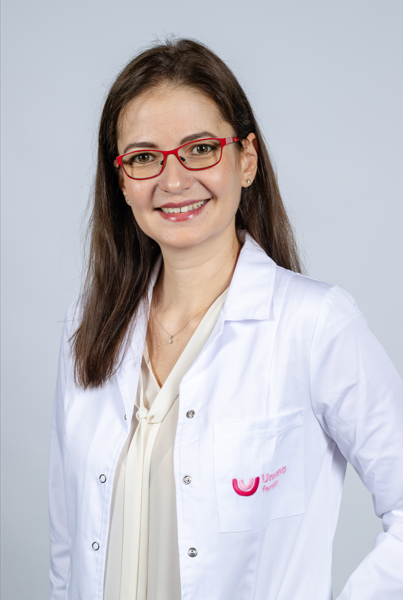
Dr. Flavia Haradja
Depending on your personal and family health history, your doctor may refer you for genetic counselling. There are different stages in your life when you may be referred for genetic counselling:
1). Pregnancy planification: Pre-pregnancy genetic counseling can address concerns about factors that could affect your baby during life or your ability to become pregnant, including:
2). During pregnancy: Genetic counseling while you are pregnant may address certain tests that may be performed during pregnancy, any detected problems or conditions that could affect your baby during childhood or life, including:
3). Kids care: Genetic counseling can address genetic testing if your child shows signs and symptoms of a condition that may be genetic, including:
4). Managing your health: Adult genetic counselling includes specialist areas such as cardiovascular, psychiatric and cancer. Genetic counselling can be useful if you have symptoms of a condition or if you have a family history of a condition that makes you more likely to be affected by that condition, including:
Following your genetic consultation, you may decide to have genetic testing. Genetic counseling after testing can help you better understand your test results and treatment options, help you deal with emotional concerns, and refer you to other health care providers and support and advocacy groups.
Spune-ne cum a fost experiența ta cu Doctor Flavia Haradja!

